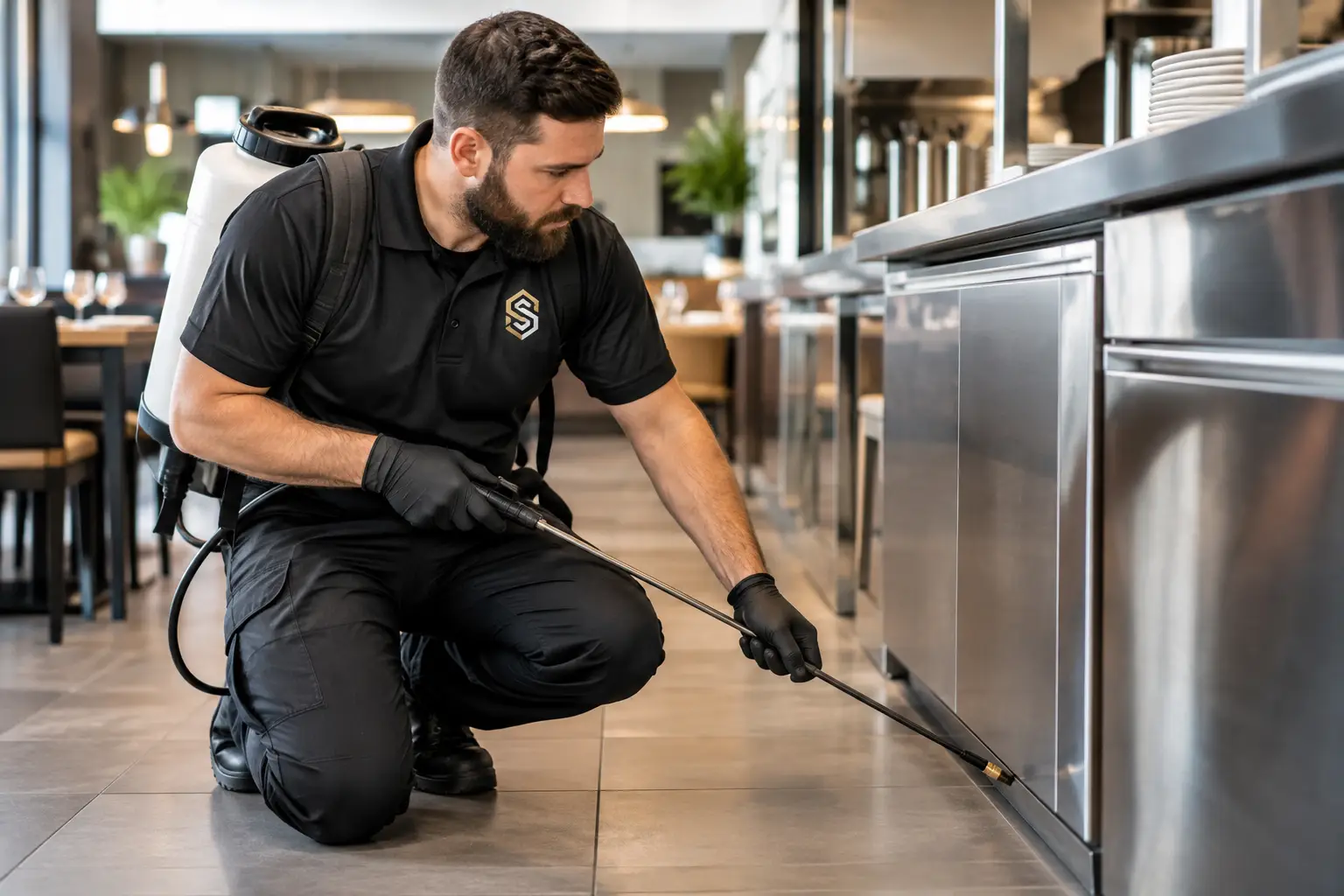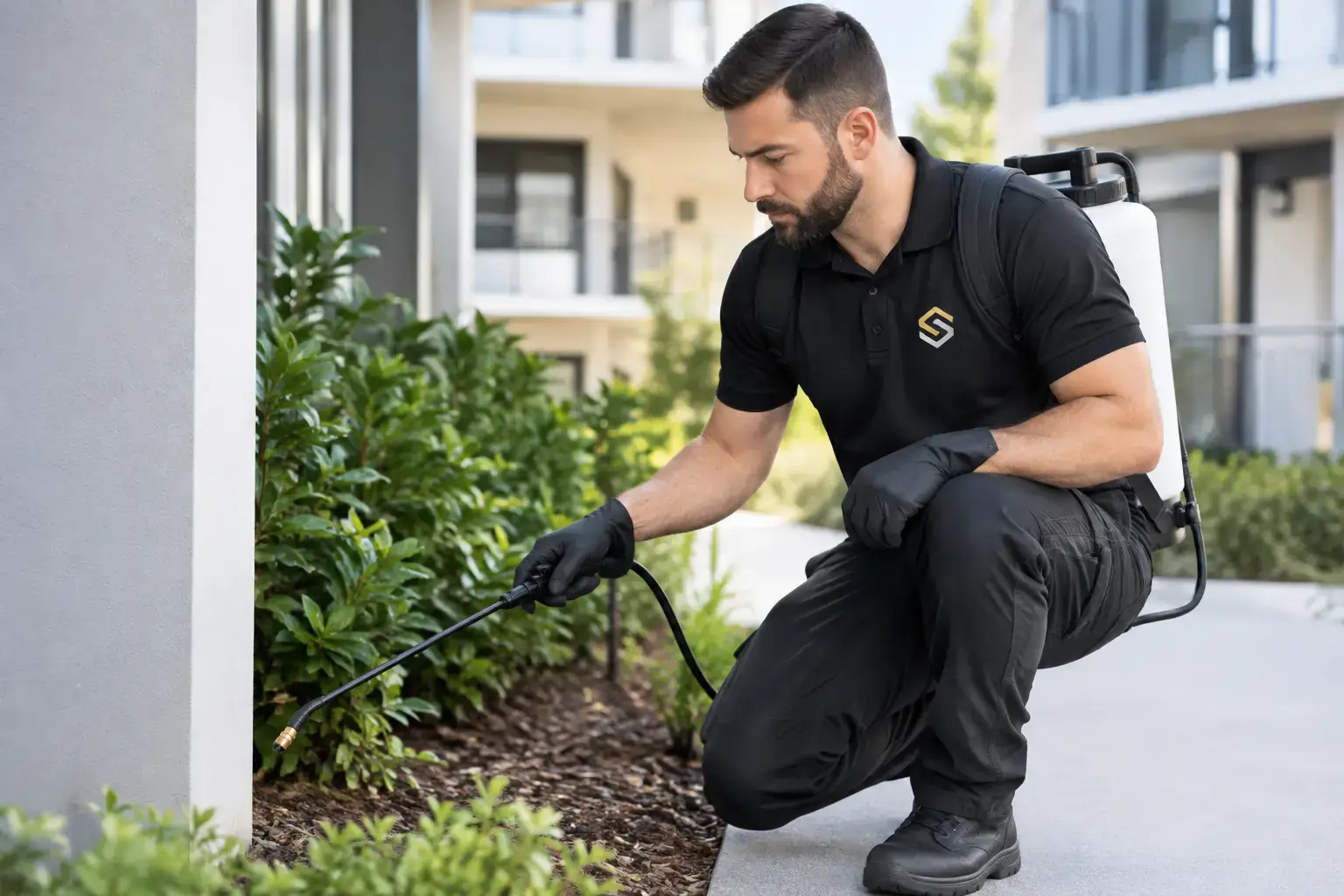
A cockroach trail in a shared bin room, rodents in a ceiling void or birds nesting beneath solar panels can quickly become more than one resident’s problem. Clear body corporate pest control responsibilities help committees act early, avoid disputes and keep common areas properly managed.
For Queensland strata schemes, the practical question is usually not simply, “Who found the pest?” It is: where is the pest activity, what is causing it, and which part of the building or grounds is affected? The answer can sit with the body corporate, an individual lot owner, a tenant or, in some cases, more than one party.
What is the body corporate responsible for?
A body corporate generally manages and maintains common property. That usually means pest issues in shared spaces fall within its scope, particularly where the activity affects the building, grounds or multiple residents.
Common property can include foyers, hallways, stairwells, car parks, gardens, shared rubbish areas, roof spaces, external walls, communal courtyards and service areas. In a townhouse complex, the exact boundary may be less obvious than in an apartment building, so the community management statement and scheme plan matter.
Where pest activity is located in common property, the body corporate should organise an inspection, identify the source and arrange an appropriate treatment or exclusion plan. A one-off spray may settle visible activity for a short time, but it will not address an open roof void, overflowing bins, moisture issue, entry gap or nesting site that keeps feeding the problem.
For committees and managers, the job is about maintaining the property, documenting action and giving residents clear instructions. Pests are our problem to solve, not yours to live with.
When is a lot owner responsible for pest control?
Lot owners are generally responsible for pest issues contained within their own lot, particularly where the source is linked to conditions inside that space. This can include food storage, rubbish left on balconies, indoor clutter, pet food, leaking fixtures within the lot or a pest problem limited to a single kitchen, bedroom or courtyard.
A tenant may have obligations under their lease to keep the premises reasonably clean and report pest activity promptly. That does not automatically make the tenant responsible for treatment. The tenancy agreement, cause of the issue and condition of the property at the start of the tenancy all need to be considered.
The catch is that pests do not respect lot boundaries. Ants may enter through a shared wall, rodents can travel through ceiling and service cavities, and cockroaches may move between connected units. If activity inside a lot appears to originate from common property or affects several lots, the body corporate may need to investigate the wider building rather than leave each owner to arrange separate treatments.
Location matters, but cause matters more
A dead rodent found in a unit does not necessarily mean the unit owner caused the issue. Likewise, a nest on a private balcony may still be linked to access points on the external building structure.
The most useful approach is to assess both the location of the activity and the likely source. A written inspection report can record evidence such as droppings, rub marks, nesting material, gaps around penetrations, damaged screens, overflowing waste areas or moisture conditions. That gives the committee a factual basis for deciding what is common property work and what should be addressed by an owner or occupier.
Common body corporate pest control responsibilities in Queensland
Each scheme is different, but body corporate responsibilities commonly include arranging pest management for shared areas, responding to reports of pests affecting common property and maintaining building features that allow pests to enter or nest.
For larger or higher-risk properties, a planned service schedule is often more effective than waiting for complaints. This is especially relevant for apartment buildings with shared bins, hospitality tenancies, loading areas, landscaped grounds, roof access points and underground car parks.
A practical programme may cover the following areas:
- Shared rubbish rooms, bin bays and recycling areas
- Roof voids, eaves, plant rooms and service penetrations
- Car parks, storerooms, basements and common corridors
- Gardens, retaining walls, drains and communal outdoor spaces
- Bird activity around solar panels, balconies, awnings and loading docks
- Termite inspection planning for susceptible building areas
Not every site needs every service. A small block with no shared facilities has different risks from a multi-storey complex with restaurants at ground level. The point is to match the plan to the property, not apply a generic treatment and hope for the best.
Termites need a different response
Termites are not handled like a routine cockroach or ant issue. They can enter through concealed points and remain unnoticed while causing damage within timber, wall cavities or other building elements.
For a body corporate, responsibility may depend on where termite activity is found and which structure is affected. Common-property areas, shared structural components and external building elements can require body corporate action. Internal lot features may be the owner’s responsibility. Where the boundaries are unclear, the committee should check the scheme documentation and obtain property-specific advice before authorising major works.
Regular inspections are a sensible part of property maintenance in Queensland, particularly where there are garden beds against buildings, timber features, drainage concerns or previous termite activity. Inspection findings should be recorded, communicated clearly and acted on before a small concern becomes a building-wide headache.
Bird control is often a shared-property issue
Birds nesting or roosting around roofs, eaves, air-conditioning areas, solar panels and balconies can create mess, block drainage and damage building finishes. They can also generate repeated complaints between neighbours when nesting materials or droppings spread across adjoining lots.
If birds are using common-property structures, the body corporate will usually need to coordinate the response. Effective bird management focuses on the access and roosting point. Physical exclusion, proofing and maintenance are often more useful than repeatedly clearing a nest site without dealing with why birds keep returning.
Residents should not be expected to make alterations to external façades, roof areas or shared structures without approval. A coordinated approach keeps the building appearance consistent and avoids creating new access gaps or maintenance issues.
A practical process for committees and managers
Good pest management is organised, not dramatic. Once a report comes in, the body corporate should record the issue, establish whether it is isolated or recurring, and arrange an inspection where common property may be involved.
1. Describe the issue clearly
Ask residents or site staff for useful details: the type of pest, exact location, date and time activity was seen, photos where possible, and whether other lots are affected. “There are bugs everywhere” is understandable, but it does not give a technician much to work with.
2. Inspect the source, not just the symptom
The inspection should look for harbourage, food and water sources, entry points and conditions that support repeat activity. This is where shared waste handling, unsealed penetrations, drainage defects and building maintenance issues often come to light.
3. Treat and exclude where required
Treatment should suit the pest, location and level of activity. Where practical, pair treatment with exclusion or maintenance work. Sealing a gap, repairing a damaged vent, improving bin-room management or installing bird proofing can reduce the conditions attracting the problem.
4. Follow up and keep records
Committees should retain inspection reports, service records, recommendations and resident communications. This creates a clear maintenance trail and helps property managers brief future contractors, committee members and owners. For commercial or mixed-use sites, tidy records also support site compliance processes.
Preventing disputes between owners and occupiers
Most body corporate pest disputes start when responsibility is assumed rather than checked. A committee can reduce friction by explaining what has been found, what area is affected and what action is being taken.
If the issue appears confined to a lot, communicate that fact respectfully and provide practical next steps. If common property is involved, tell residents when access may be needed and what preparation or occupancy directions apply. If multiple lots are affected, coordinate treatment rather than asking every resident to solve one shared problem alone.
It also helps to set expectations around maintenance. Residents should report water leaks, damaged flyscreens, overflowing bins, bird nesting and pest activity early. The body corporate should respond to common-property reports with a process, not a shrug.
When to bring in a professional pest manager
Bring in a pest manager when activity is recurring, the source cannot be identified, pests are moving between lots, there is suspected termite activity, or birds are using elevated and hard-to-access parts of the building. These are not jobs for guesswork or a quick trip to the hardware aisle.
Syndicate Pest Solutions works with body corporates and property managers across South East Queensland to inspect, treat and follow up on pest issues with clear reporting and coordinated service. The aim is simple: identify what is happening, deal with the cause and give the people responsible for the property a clear path forward.
A well-run scheme does not wait for pest complaints to pile up. It treats each report as useful information, acts on the evidence and keeps the building in order before a minor issue moves in and makes itself at home.